What is the best translated fiction to read? With Karl Ove Knausgaard

What are the best new books in Korean fiction? What is the process of translating a book into English? And how do you evoke a sense of place in your writing when you haven't visited it? This week we sat down with award-winning and internationally best-selling author, Karl Ove Knausgaard, to discuss his latest novel translated into English, The Night School.
The School of Night is a Faustian inspired meditation on art and creativity, the 4th novel in The Morning Star series, and the first in the sequence that can be read as a standalone novel.




Episode transcript
Rhianna Dhillon:
Hello and welcome to Ask Penguin, the podcast all about books, their authors and their publishers. I'm Rihanna, Dillon, and in each episode I sit down with brilliant writers and penguin colleagues to talk about their latest work and the books they can't stop recommending. Today I'm delighted to be joined by Karl over Ks Guard. Karl Over is best known for his six-part autobiographical series, my Struggle, beginning With a Death in the Family, and Ending With The End. The books trace his journey from childhood through to adulthood and together they create an extraordinary portrait of human life. The series has been described as frame breaking, obsessively, detailed, and radically confessional. Over the years, Karl Over has been recognised with numerous awards, including the Norwegian Critics Prize for literature, the Bragga Prize, and the Jerusalem Prize, his latest novel. The School of Night is part of the Morningstar sequence, though it absolutely can be read as a standalone, it is genuinely quite horrifying and totally absorbing. Set. In Southeast London in 1985, it follows Christian Hadland, a 20-year-old photography student who's left his family in Norway in search of success and recognition. When he meets Hans, an eccentric Dutch artist, Christian begins to believe that anything is possible in art. But after one terrible night, his future hangs in the balance, and that night threatens to follow him for the rest of his life. Cullo, welcome to Ask Penguin. Thank you so much for joining us, being here.
Karl ove:
Thank you for having me.
Rhianna Dhillon:
So the School of Night is the fourth book in your Morningstar sequence?
Karl ove:
Yeah, I think so, yes. Fourth,
Rhianna Dhillon:
But it also works as a standalone.
Karl ove:
Yeah, very much so.
Rhianna Dhillon:
Very much so. Was that always your intention?
Karl ove:
No, it wasn't. I just started writing the Morningstar novel and I realised after 600 pages that the story is much bigger, and then I didn't know where to go, so I just picked up on something else and took it into the same world.
And then I realised when you have a world, you have many minor characters and you can just go in there and look what they're doing. So it's expanding and it's like for me, like total freedom, but with the fact that things had been said in the books before, which kind of sets the past for them. So yeah, I love writing these books and being in this, and I know I could have continued, could have write 50 books about it because it's like an endless people and events and they're all connected, but I won't do that. I've written six now and it will be seven and then that's it.
Rhianna Dhillon:
Seven and done?
Karl ove:
Yeah.
Rhianna Dhillon:
Okay. How do you know that you will be done after seven if you do potentially have ideas for 43
Karl ove:
Months? Yeah. Well then I started this in 2020, and that means that I've been in it for six years when I'm done, and that's a long time. And I have so many other books I want to write, and I realised I can't stay in half longer. I need to get out. And it was the same with my self biographical series. It was six novels and Okay, that's about it.
Rhianna Dhillon:
That's your number?
Karl ove:
Yeah.
Rhianna Dhillon:
It's so interesting because some people, it'll take them six years to write one, and
Karl ove:
I used to do that. My first novel, I guess it took me more 10 years to get there. And then the second book was five years, and then the third book was five years. And most of that time I spent not being able to write. It's incredibly frustrating. And then I did my struggle and the concept of my struggle was I accept everything that comes. I write about everything that comes,
Karl ove:
And then
Karl ove:
I realised this is the waste, and that's how I start a novel. I just thought, no matter how bad it is, I just continue, no matter how bad it is. After a hundred pages just continue and then something happens, then becomes a novel, then it's okay. It's not good, but it's a novel. It's a thing. So now what I'm doing is one novel a year, and I work five days a week, five hours a day, got lots of kids have to take care of. But if you do that, it's done. It's an novel year,
Rhianna Dhillon:
Five hours a day. So you're very rigid in your structure.
Karl ove:
Not really. I mean, those five hours I can sleep or eat or do whatever I want. But the fact is that you have to be close to the writing every day and then the weekends do something else. And then yeah, then there's been six novels done in that way, six years, six novels.
Rhianna Dhillon:
I hate it when people make things very London centric all of the time. But I am somebody who lives in London, and so I'm very fond of things that are also set in London. And this is your first novel,
Rhianna Dhillon:
Which
Rhianna Dhillon:
Is set in London. Exactly. So what drew you to basing it not only in London, but also London of 40 years ago?
Karl ove:
So London, that was basically Christopher Marlow and that thought,
Rhianna Dhillon:
Right?
Karl ove:
I read about him many years ago. I didn't know who he was. I read an essay by Burris and he makes everything fantastic. And it was about Shakespeare. Then this fantastic person popped up. He was
Rhianna Dhillon:
Great character in,
Karl ove:
Yeah, yeah. And I haven't heard about him. I was like, who is this? What happened here many years ago? And then I come to London and I said, Deford that where Mala were killed. Yeah. It was, okay, I have to write, so I have to set it in London. That was the one thing. But why 1996 is because I grew up in Norway, so 1996, I would've been like 18, 17, 18. All the music I listened to when I was a kid came from her. It was British music, all the bands culture. And I was weird because I grew up in a little remote island in Norway, incredibly different from ancestor from London at that was where I was longing too. And then when I came up with this novel has to be London, when should I set it? I don't want to write about contemporary London because I don't know enough about it. If I set it in 1986, it's like a fictional space for me and I can fill it with the music I loved when I was little.
Rhianna Dhillon:
That's so interesting that you say that. You dunno enough about contemporary London, but you live in contemporary London, but you didn't live in London in 86.
Karl ove:
No, but if I wrote about London now to be, you had to go and check things and do research and
Rhianna Dhillon:
Accuracy.
Karl ove:
The details has to be right and all the names that's floating into politics and everything. But if you do it in 1996, you can create a fictional space and you can't really check it. Yeah, I did. I let my translator, Martin eight can read it because he's the right age and he corrected say, well, when they're drinking coffee, they didn't have those paper cups that had these kind of plastic cups that gets very hot and comfortable and
Rhianna Dhillon:
The really thin one,
Karl ove:
The bridge. Yeah, exactly. Those kind of details he helped me with. And those are crucial to get the sense of how it is to be there. And then I just guessed, well, it has to be, I'm sure London 86 was kind of bleak and gritty, and that's a novel in itself.
Rhianna Dhillon:
I really love the tactile nature of the detail that you write about. You sort of talk about being very slow in your ability to tell a story. You go through the minutia,
Karl ove:
The very small
Rhianna Dhillon:
Details. So what is it, do you think about those levels of banality that actually really fascinate a reader that really bring them into your writing and your world?
Karl ove:
Yeah, I don't know. When I'm writing, I'm sure people will be bored
Rhianna Dhillon:
No
Karl ove:
By it. Yeah. But it's the details, what the details is, it brings you into a certain moment, a certain presence. And that's where we live. Everything is present. That's where everything is in the moment. I want to get into the world, and that's my way in is the details and the physicality of it. But if you do that, it could take a novel, write about 10 minutes if you do it properly. So it's always, you have to balance it somehow. But that's why it's so many novels and the stories hardly have hardly started. Really.
Rhianna Dhillon:
Yeah. I think what I really love is how you capture the pub culture in London, which I sort of hope we never lose, although I feel like we are. You hear stories about pubs closing all the time, but there are parts of this that feels like a real love letter, however bleak, to pub culture. So tell us about your way into that, which does feel, I dunno, maybe that's a really insular thing to say, but feels quite uniquely British.
Karl ove:
Yeah, it is. Uniquely it is that it's very British. I don't know really. I mean, I have a character, he's 20 years old. He comes from Norway. He's never seen a big sit in his life. He wants to be an artist. He gets a bed in depth foot. What will he do? Yeah, what can I do? Yeah, we goes out, look around as the pub because into the pub, and I kind of know I was in Britain in the nineties and I can remember the feeling of, I can't explain, but this papa been there many, many, many years and it has never been refurbished or anything. It's like it's the smell of smoke. So I just let him do that and I try to live his life as that I thought it would be. And I didn't think about how represent British culture. It was just, it's there. He's going to go there. And that was the way with everything. And also the feeling of eighties England. One of my favourite TV series is the Smiley series from the eighties. Have you seen that?
Rhianna Dhillon:
No, I haven't. But I know what you mean. Yeah.
Karl ove:
Yeah. It's incredibly slow. But it has that sense of Britain at that time, the seventies and the eighties is so present in that film. And I was there when I was a kid, when I was, I must have been seven years old. It was one of the first ground memories I have. We made a trip to England, drove through England in 76. It was incredibly hot. And it was,
Rhianna Dhillon:
Yeah, the long hot summer of 1976.
Karl ove:
Exactly, exactly. I didn't know that. And it was garbage. And for us, for me, it was absolutely fantastic.
Rhianna Dhillon:
Yeah, the smell didn't put you off.
Karl ove:
No, it didn't. It was great. And so I vaguely remember the atmosphere and on those films, there's an atmosphere, this, and there was almost like a style connected to it. So I just tipped a little bit into that when I wrote. But the most important thing, the post-punk thing, the music thing, I think.
Rhianna Dhillon:
Yeah. Can you tell me a bit about the structure? Because we sort of moved back and forth a little bit in time. How do you map that out and why did you think that for Christians story, this would be the right approach?
Karl ove:
Yeah. Well, I got this guy moving to London. I didn't know anything about him, and he was a nice, ordinary inwe guy. I thought, okay, it's Christmas. Well, he has to go home. And then he went home to his family. And then I discovered, well, he's really, there is something not quite good with him. He has actually no empathy. He doesn't care about other people. And that was visible to me when he came home to his parents, he got loving parents. So there's no kind of psychological reason for him to being such an asshole because he's an asshole.
Rhianna Dhillon:
I was going to say dick, but yeah.
Karl ove:
Yeah. So that was when he was home, and then he got kind of an affair with a girl there. And I said, okay, he's that bad. And then I sent him back to London and continued the writing, and I had no idea what's going to happen. So he got involved with some woman there and he stops his bike to have a cigarette and someone asking him for a cigarette and he gives a cigarette. I had no idea what was going to happen. And that's the kind of turning point in the novel and then, okay, what's going to happen now? And it was that all the way for me. So it was never a plan for me to B2C.
Rhianna Dhillon:
It's always a surprise for you, even as it's
Karl ove:
Coming out. Yeah. There is a scene with his actually cooking a cut.
Rhianna Dhillon:
Oh my God. I mean, I'm glad you brought this up.
Karl ove:
Yeah, because it was just, Danny's a photographer, so he's out taking photos of trees without leaves. And I think, so it kind of reminds him of scaffolding and he starts to think about the skeleton. And he's a photographer. Maybe I can make a series of that, but then I need a skeleton, I need an animal, and then maybe I can get a dead cat. And what do you do with the dead cat to get to the skeleton? I have to cook it. What would that be like with the smell in a little bed? And so on and so forth. And that's the way the whole book is written. But the bad part about that for me is that it's like everything that happens, really, it's really happening when I'm writing it. And then the rest is terrible twist at the end. It was so hard to write, really. It was so really hard crushing to do. But a novel has logic on its own. You have to follow it, see where it takes you. And so this took me to some dark places.
Rhianna Dhillon:
I was going to ask because it's very rare that I have to, I don't get very squeamish, but film Sure tv, sure. But my imagination, I feel very safe in it. It's very rare that I have to put down a book. I had to put down your book with the cooking of the cat because it made my stomach royal so much. And I was going to ask you if you do get grossed out by your own writing, because I could smell it. I could touch
Karl ove:
It. Yeah. No, no. Not that. What can really gets me, it's kind of the emotional, emotional stuff that's going on that could be very hard and difficult to write. But those kind of things, it's almost like a technical job, how to make this thing work on a pitch,
Rhianna Dhillon:
How to freak your reader out as much as possible. And unlike a lot of the novels in the Morningstar series, the novel is told just by Christians through Christian's perspective. So actually, was it a relief to just write in the singular after having written from multiple perspectives? Or did you enjoy the challenge of having many voices in your head?
Karl ove:
Yeah, I really searched that out when I started a series because I've been writing a series about myself being in my own head for so many pages. So I really wanted multiple characters and I also wanted interaction between them and all of that. Almost like a cacophony for me. But then this book just amounted something else. And I wanted one place where evil isn't just something out there, but it's like the grain of something maybe evil I could write about. So that's a lack of empathy, really. And it's in him, and you can relate to it and you can maybe even identify with it a little bit. And I think that's the place I wanted to be in that book and to make that work. I had to, many pages was necessary to kind of work with that.
Rhianna Dhillon:
Yeah. Well, let's talk a bit more about Christian. So the jacket copy says Meet Christian. Is it Hadland?
Rhianna Dhillon:
Yeah.
Rhianna Dhillon:
You'll hate him, which is a great, great hook. How much fun did you have making, creating such an unlikable protagonist?
Karl ove:
It was fun. The part where he can do things that I wouldn't have done, but might have thought I would like to do that
Rhianna Dhillon:
I was going to ask, how much do you put of yourself the worst bits of yourself into the characters don't
Karl ove:
Like? Yeah, very much so. Yeah, that's the fun part. And also, yeah, people are annoying, which I never do in real life, but I did it in that book. But the hard part of it's course also, that could be very unpleasant if you see writing about someone, no one has told me to write about him. It's my own choice, and why do I go there? And how come he so easy for me to make him like this?
Rhianna Dhillon:
Yeah. Was it easy for you to make him like
Karl ove:
That? Yeah, it was. And I think the thing with not having empathy is, well, it's terrible for everyone around you, but for you and for an artist, you have total freedom. You can do whatever you want because you don't care about the consequences. You can care about yourself and your art. So it's a space there that I think it's very interesting. And I think many artists and writers would, everyone has of course has this in them, but maybe more in that world. And also what I wanted to write about is some artists, if you get to a certain level, you can actually do what you want and people will just say, oh, you're great. And oh, this is so good. And you get an entourage with people around you. And that's a phenomenon in the world. And I've seen it myself. I know how it is. But since this is in an art world and I'm inventing pieces of art that he does, that doesn't exist. That was fun. But then I had to check it, could this be real? And then I sent it to an artist I know, and she said, it is Christian Harland is that, and she pointed at the particular person because he's a really asshole. Is it him? But it wasn't, it was just
Rhianna Dhillon:
Artistic monsters.
Karl ove:
Yeah.
Rhianna Dhillon:
How did you decide which moments? Quite big moments, but also I guess again, the minutia, which would reveal Christian's cold nature incrementally at the beginning?
Karl ove:
Yeah, no, that's just by following him and into situations. And it's like I've become a method writing, and when I do that, I am there and I am him in the writing. And it's not like I think, what would he do now? It's like what would I do now when I'm him?
Rhianna Dhillon:
So there's a moment where the bar keep pours him, his usual, his felt like season coming. He's like, I got you. I you ready? And just despite him, he orders something different, which is a real ding move.
Karl ove:
Yeah, yeah. Well, I was writing about that and that was what I decided to do there.
Rhianna Dhillon:
I loved it because I think a British person might be just like, I'll take it. Whatever.
Karl ove:
I would've taken it a hundred times,
Rhianna Dhillon:
The average person would take it.
Karl ove:
Yeah, maybe that's why I'm going into this also because I avoid conflicts.
Rhianna Dhillon:
So it must have been really fun writing multiple conflicts, even the smaller ones. Yeah, I love that. So you mentioned Marlo and Dr. Faustus is a really strong presence throughout the novel. They discuss it. Vivian, one of the characters has a production of it. What is it, do you think about the, because I know that you've talked in the past about the devil and there are not really overt references, but there are definitely references to the plot of Faustus in the plotting of this book. So why faus? I know you talked about why Marlo, but why Faustus in particular.
Karl ove:
In the fall of Lucifer, and he's an angel and he started to think that he's better than God even, and he's just thrown down. There is a fall and it's like a star on the sky. You could see fall. And that's the devil coming down here.
And there's so many things connected to it. So death for instance, is connected to the devil, almost like some places in some versions that he almost introduced death. There were no death before the devil and you got Garden of Eden and this temptation on, yeah, that really made us human, took us out of the animalistic world and met as human. But there is something that connects to the devil, which is like, it's blood, it's sin, it's sex, it's dirt. It's down there in that thing. And then you get all the other stuff in. It's very concrete in a way and flashy. And then you've got all the other things in our culture at the moment, which is it's Mormon abstract. You've got images. The physicality of the world is we are moving away from it, and we're also moving away from nature in many ways. So that was kind of the core thing I wanted to write about in these books. And he also got the agnostic myth about God really being the devil. The Christian God is the devil, which I love the thought of. It turns everything upside down. And so the devil is very close in the starting point of this series, really.
And then I wrote Morningstar, there is a crime. There is three people who is killed and tortured and utilised. You say that mutilated, terrible mutilated. And the heads are turned around, so they have their nose backwards. So this is terrible thing. And then in third book, and I just wrote that I didn't plan anything. It was just made a queer crime scene. This is how it looks.
And then in the third book, I have a private detective. It's incredibly fun to write about private detectives, but he had to investigate this crime scene. And I didn't know what happened. I just met a crime scene. There is some sort of devilish thing here. There is a devil symbol or something. So he reads and I read an, which is the first folk tale of host. And in the end, the way the devil kill is by turning the head around. And I didn't know that.
Rhianna Dhillon:
Oh wow.
Karl ove:
I must have known it subconsciously or whatever. But that was a connection to Faust. Then, okay, I need to follow Faust, but I don't want T's Faust, that's then Marlo. And then Marlo has this fantastic life, so little about him, but his life was incredibly violent and he was changing complete English language and the English theatre and everything. And he's the same age exactly as Shakespeare. And they were in the same room. And Malo was when they met, he was the superior one. He was the talent and the guy. And then he was killed in Deptford
Rhianna Dhillon:
Over a bill.
Karl ove:
And Shakespeare over a bill. And Shakespeare has the scene and becomes the greatest writer the world has ever seen. And that's such a good story. And that's not hardly mentioned in the book, but I feel like it's in the background there and it has something to do with what I'm doing with Christian and all of that. That was a very long answer. I
Rhianna Dhillon:
Loved that. That was such a brilliant answer. And also just while you were talking about that, it made me think about the things that, because obviously the devil, there is something innately attractive about the devil. And it's like the characters in the school of night are drawn to people that aren't necessarily good for them. Christian and Hans, and the women who find Christian attractive. So what interests you about that exploration of why we are drawn to things which are so clearly not good.
Karl ove:
Not good. That is actually very, very difficult question. Of course. I mean with him it is like an easy thing because he does what he want to do and I can't do that. A child, little child will do whatever he wants, but there is so many other things that are at work here. And being a human being is about learning all of those things. And who are we for, are ourselves or are we for others? But there will always be an all literature, since the beginning of literature has dealt with this, you have an immediate urge, this limitation just to follow your instincts or to follow your desire or whatever. And yeah, we can do that. There is something other things to take into consideration, and that's a conflict. And it will always be a conflict. And if you get angry, you don't kill the person, you angry react, but you might feel like you want to do it. But Christian is a person who doesn't really need to do really, and he doesn't need to care about, he doesn't care about other people than is in a way free. But would we have a society where we can do what we want? No, it would be hell. Yeah, I think so.
Rhianna Dhillon:
A society filled with devils.
Karl ove:
Yeah.
Rhianna Dhillon:
You talked about Christian being an artist and being a photographer. Specifically, we talked to Paul Hawkins about this, about sort of exploring the art world. Why photography and how, because you used to be a critic, is that right? Of literature.
Karl ove
Yeah.
Rhianna Dhillon:
And so there are these elements of criticism, art, criticism that comes through in the people that Christian is talking to, showing his photography. So how much of that was sort of harking back to, I dunno, an interpretation of art that you used to work in?
Karl ove:
Photography is very specific because the very first photography of people is it's, I don't know, when it's 18 something, it's a street in Paris this morning. And there's no people there because the exposure time is so long that all the movement disappears. And then there is one person, it's like black, tall, just standing there, can see him. And it's so scary. It's like, who is that? And I know people who seen it instantly think that's the devil. The devil is kind of out of our time. So it doesn't affect him the exposure time. And I've written about that. I've written about that. And that's a photo in the book also. So if this is the first photography, first real photography, and the devil is kind of there. So I needed to make Christian a photographer because he's also close to the devil's. Well, and I think it's interesting because something changed our culture. It's the photography, because it's the first time the past have could been captured, the moment could have been captured. And that changed the concept of almost for being of a culture. You could see people who are dead, you could see generations back.
And If I didn't know anything about a, I found that very scary. Isn't that, no, that's dominating completely our culture. It's a visual culture based on that fact. So it's all part of what I'm trying to find out in the novel.
Rhianna Dhillon:
Yeah, maybe deliberate is not quite the right word, but when I was reading, because you're referencing real life pieces like this photo, but I immediately went to go and Google it. I didn't know it. Go and Google it and have a look and see the kind of visual of what you were talking about. So how much of these references would you like to encourage your reader to, if they don't know to stop, put down the book, go and have a look, come back to the book.
Karl ove:
Oh, yeah. No, I think should just read a book and if you remember something, then you maybe check it, then maybe it was important, but if not, it's just a part of the flow. If you're interested, I mean, I do that all the time. Google stuff and I read stuff.
Rhianna Dhillon:
Yeah, well, I was underground, I think. So I was like, I made a note when I got overground to look it up. And it was really interesting. And then it added in this whole new dimension. I felt like I was in one of the art classes at there, Christian is in, which is quite nice. When you are working, do you listen to music? Okay, so what you were talking about the eighties British post-punk scene. So what were you listening to when you were writing this?
Karl ove:
I started to review albums when I was 16 in the local newspaper.
Rhianna Dhillon:
Oh.
Karl ove:
So I got an incredibly, then I've sold it now, a big collection of albums. And I read when I was from very young age, my brother started my own 10 to read NE and Sounds and the British music. And in this book I picked up those bands and I started to listen to them again. And some of them are still great, some of them was really crap. But at the moment then it was a hype involved, but it was great fun. And so I had to listen to them for research purposes. But some of those band I still love, but I also always have music on when I'm writing because it creates a space and I'm familiar with that space so I can relax in it and feel at home. And then I can do transgression in the writing because I'm safe, I'm here. And also, if you have the same music every time you do the same thing, you associate the music with what you're doing. So if I play some novels, I played only one record throughout writing of novel and we talking about a year, same record. And when I put on that record, I know where I'm, and I can start to write immediately because it's kind of almost a P of reflex, but I have to kind have a plan.
Rhianna Dhillon
I was listening to Wolf Alice while I was reading this and they've got a song, thorns. And as I was sort of getting to a point I think where Christian's father, he overhears him, calling him a narcissist. And there's a line in thorns where she's singing, maybe I'm a Narcissist. And I was like, huh, that's so weird. And then Paul Balles became the soundtrack too, and I could only listen to that album while I was reading your book. There's a great debate that your characters have between Swedish and Norwegian music.
Karl ove:
Yeah, that's right.
Rhianna Dhillon:
How true to life was that debate? Is that a debate that you've had yourself? It felt like a very real debate.
Karl ove:
Yeah, kind of, but not very serious. But yeah, I can move to Sweden in 2001 or something. And I was shocked because the music was so good. There's a good music in every genre.
So I have to admit they have a much more advanced, but getting there in Norway too. But some of the post punk bands in Norway were actually great
Karl ove:
Completely.
Karl ove:
They did completely their own thing and really minor stuff and still good.
Rhianna Dhillon:
So would you encourage your reader to make a note and then once they finished your novel, then go and listen to the bands that you referenced? You've cited so many influences. John Fosse is one. Who else continues to influence your writing, do you think?
Karl ove:
That is, I guess almost impossible to reply to because I never know what's going to influence. I know what I like to read, and it may go like this. I read a book, I've done this, I read a book, made a huge impression and kind of forgets about it. And then two years later I write a book. I have no idea, I'm just writing. And then two years later I can see, oh, I took that from that book and this from that. So it's like everything is just going in and disappearing for me. And then when I write, somehow comes up a bit camouflaged and a different shape, but it's come from somewhere. If I start to look at what are they really doing here, then I'm lost and I can't read.
Karl ove:
So
Karl ove:
I have to kind of just disappear into, so I can't learn writing from looking, but I do subconsciously I think, and I can't tell what's what really.
Rhianna Dhillon:
What is next for you then? So you've got another couple of books in this series?
Karl ove:
Yeah. So the next one is, it's already translated, but I think it'll come up next year. And then yesterday actually, I finished the next book Innovation.
Rhianna Dhillon:
Oh, congratulations.
Karl ove:
Thank you. And it was sent to print? Yeah, it was sent to print yesterday and I worked with it the day before it was sent in.
Rhianna Dhillon:
Wow.
Karl ove:
It's been incredibly stressful. It was like a summer from, but it went well because if you have one book each year, the deadline could be incredibly tight. So if there is an I essay, I have to write, I lost a month, and then we'll have to speed it up. So lemme know half this book is written almost since August.
Rhianna Dhillon:
You wrote half a book.
Karl ove:
Yeah, because I had to half
Rhianna Dhillon:
The book since August.
Karl ove:
I had to speed it up.
Rhianna Dhillon:
Just for listeners, we are recording this at the very beginning of October. So you wrote it in a month?
Karl ove:
Yeah, well, one and a half,
Rhianna Dhillon:
One and a half months.
Karl ove:
Wow, that's a whole book. It's a half of the book.
Rhianna Dhillon:
That's incredible. What does finishing a book look like to you? Do you have a routine? Do you have a celebration?
Karl ove:
Yeah, no. So it was sent yesterday and yesterday. I felt like there was someone missing, something missing. It can hold onto something.
Rhianna Dhillon:
It's
Karl ove:
Always there, can always go and hold onto it. And I was gone, what I'm going to do. But today I've been very happy and kind of liberated and I can do what I want. And
Rhianna Dhillon:
The first thing you did was come and speak to me what
Karl ove:
I wanted to do that, but this is not work for me. Work is very different this come and talk to people. That's nice. But then since the next deadline would be the next September, I have to start working on that soon.
Rhianna Dhillon:
But you can have a few drinks in between now and then. Should
Karl ove:
Be. Yeah, I can. Yeah.
Rhianna Dhillon:
A
Rhianna Dhillon:
Few red stripes just for Christian.
Rhianna Dhillon:
Yeah,
Rhianna Dhillon:
The school of night and all of over's. Other titles are available now from wherever you get your books. Karl over. Thank you so much for joining us for a really
Rhianna Dhillon:
Wonderful chat. Me. Yeah,
Rhianna Dhillon:
Thank you. Thank you. So as well as our author interviews, we love our listeners to leave with plenty of book recommendations. So each episode we put your questions to our guests. So joining me and Carl over to help answer some of those questions is publishing director Jane Lawson. Jane, thank you so much for joining us on the podcast. Pleasure. So let's start with you telling us a little bit more about what being a publishing director involves.
Jane Lawson:
Well, as I was just telling our friends before I came on air, I have been at Penguin for 30 years, so I celebrated my 30th birthday in July. Congratulations. So I've had 30 years to decide what being a publishing director means. And if I say to myself, I think I have one of the best jobs in publishing because publishing directors get to meet writers and work with writers and shape their work. And we sort of curate what our listeners read in some senses. Again, that's changing. We are listening to what our readers want and then we go out and say, oh, our readers, there's an audience for this. Let's go and find those books. So my job is to find books for readers out there. That's in the very general wide sense.
Rhianna Dhillon:
Yeah. We've got so many listener questions for you this week, so we better get started. To be honest, we've got a lot to get through. One person has asked, they love to know what you're currently reading and what inspired you to read it.
Karl ove:
Yeah, that is a nice question to get. The thing with me is that I do read for what I'm writing all the time. So just two weeks ago I had to give a lecture on, he's 150 years this year and in Prague. So I had to go back to my period and read him, which was incredibly nice, especially his poetry. This weekend I had to go to in Norway where Tau, he's an original writer, he's one of my favourite writers. He died in 70, he's really great. And I have to give the lecture it's called. And then I went back and read some books I hadn't read before. He actually wrote them during the war, but was so read from the Germans taking them that he buried them in the forest.
Karl ove:
Wow.
Karl ove:
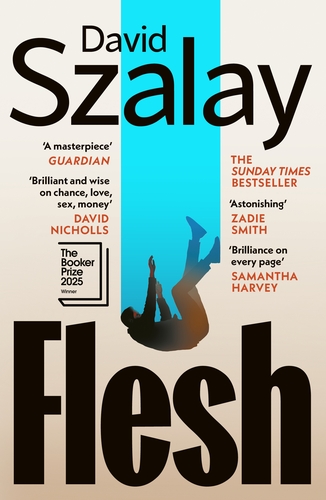
And then he took them out in 46 and published them, and I hadn't read them. Incredible. And they were both really, one of them especially was absolutely fantastic. And I still have that feeling. That novel gave me, it's called The Tower. It was great. But other than that, the last kind of contemporary book I read was Flesh by David Chalo, which I really loved. If you're a writer, at least you know how hard it is to hold back and he's holding back all the way through. It's so good and interesting.
Rhianna Dhillon:
Yeah. And delicate.
Karl ove:
Yeah. And I mean the hardest thing to write about in the world is sex, obviously. And he does it like nothing. It's just a part of the book and it's part of the character and it's like, feels like it's just flowing. Yeah, they're following his life and I think it is Best Things I've read for a very long time, and I'm not jealous because he's such a different writer for me, other than that's very often I get jealous of very good books. But this book felt like I could never have done this. Never in a million years I could have done this book. So you can just enjoy it.
Jane Lawson:
I'm reading Cursed Bunny by Bora Chung because I'm also not only in Japanese fiction, but Korean fiction and I've also bought Taiwanese fiction. I'm just very interested in that whole landscape. Bora Chung, I happened to meet the translator last week, Anton Hur, who's a huge ambassador in this space. And I thought, I really need to read the book that was shortlisted for the Booker International, and it's so beautifully packaged and well published by Hanford Star. So that's what I'm reading. It's very odd and disturbing in a good impactful way.
Rhianna Dhillon:
That sounds cool. I like that. Disturbing. Okay, this is one asking, what book would you recommend to the younger generation as the best novel ever? That's from Madeline.
Karl ove:
Yeah, so the best book for me when I grew up, I read it when I was 10, I re-read it when I was 12, when I'm 14 and 16. And I actually also re-read it when I was an adult.
Rhianna Dhillon:
I'm on tender hooks.
Karl ove:
Yeah, no, I think it actually works on all levels. Worked for a 10-year-old, worked for me. And that's Ula Kay Lake Winds The Wizard of Earth Sea. And it's got such a basic plot that feels also that it is really profound and deep. And I think that was the first time I was in contact with something deep. When I read that
Jane Lawson:
Book.
Karl ove:
I must have been 12, I can't be 10, I was 12.
Jane Lawson:
The best novel ever, in my view, in my experience, or one of the best novels ever, is a book called The Light Between Oceans, which we published 15 years ago. And is a really, it's big story, big themes, terrific characters, fabulous setting a book that makes you think and you have a little bit of a cry, but it changes you. I won't go into the plot, but I'll say it is a book that changes you. It changes you for the better or just changes you. It makes you think more about big themes, what we're doing here on this planet and existentially. Yeah, it's existential in a very accessible way.
Rhianna Dhillon:
Yeah. This is for you, Karl, over what is your favourite Norwegian book that's been translated to English that everyone should read?
Karl ove:
The Birds, the writer I mentioned is his best book.
Rhianna Dhillon:
Okay.
Karl ove:
Absolutely fantastic novel.
Rhianna Dhillon:
Brilliant. This one's for you, Jane. What Korean writers should we be reading apart from Bora Chung?
Jane Lawson:
Well, I have, as you asked, a book coming up, a couple of books coming up, probably about three or four. But the one we recently published is called A thousand Blues by Shinran, and she writes about, this is narrated by a robot, so Clara and the son meets convenience store women. So it is about two sisters who rescue a robot and together they save a race. So that mount site a little bit particular, but actually it's a family story narrated by a robot with animal justice, climate justice and sort of anti productivity messages. So it was huge in career.
Rhianna Dhillon:
Okay. So literature in translation is booming as we talked about, but are there any non-English books that you're enjoying or international authors that you are just completely obsessed with?
Jane Lawson:
There are many, many international authors thanks to the International Booker Prize. I think many people are reading in translation. Well, I'll always recommend Murakami Kafka on the shore.
Rhianna Dhillon:
So is that the first, would you recommend that to be your sort of gateway if you've not read before?
Jane Lawson:
Very. That is a good way of expressing it. I would say sort of gateway into this kind of translation fiction is probably healing fiction because people will pick that up for comfort and cafes and cats and then they will go, oh, but this whole world of Japanese fiction and this gateway fiction into translation is probably healing fiction. Okay, nice.
Karl ove:
There's lots of South American writers that are really good at the moment. It's like a second boom and I read them Marina Enrique our Share of the Night. But it's kind of an occult novel. It's really dark, it's great because it is gothic and it has some sort of, not exactly fantasy element, but part little bit of that. And then it's all connected to Argentina's past on Gina's history. People disappear and people getting killed can terror regime. It's all there, but kind of transformed into this darkness that goes in and out there. I think it was brilliant.
Rhianna Dhillon:
And then leading on from that, how do you decide which books to have translated and also how do you match books and authors with different translators?
Jane Lawson:
So the translators, because I was recently back from Korea where I met so many incredible translators, they're a really wonderful, hardworking community. So when something comes to me in translation from a Korean agent or a Japanese agent or any European agent, there's often a translator already attached often because that translator could have been the one that spotted the book in the first place. So that translator often comes already matched sometimes when there are some really, really kind of prize-winning translators. And there are
Karl ove:
Many,
Jane Lawson:
A publisher might say, well I want this prizewinning translator on this work. For example, Polly Barton who translated butter so brilliantly. But in general, I really am very happy with the translators that come match. They're already invested in the book.
Rhianna Dhillon:
I felt like maybe we need to just go back for a minute and can you just tell us the process of translating and why it's so important and perhaps the distinctions, why would one translator do it in a different way to another?
Jane Lawson:
Yeah, so that's really interesting. So I could sort of cycle back a bit to the story around the vegetarian Ang, because that really kind of brought the work of translation into the kind of mainstream. And obviously Deborah Smith was then written about in the New Yorker and various places about how much work she did to the original Korean. And it was totally author approved and they worked very closely hand in hand. But people went down a rabbit hole and said, oh, she translated this line like this, and actually it's in Korean, it says this. And that then creates, opened up a conversation about the originalists IE translating exactly what you say word for word. And the activists, which are those who listen to the second language, the secondary language, and think how will that land most impactfully? And not to go too far down a rabbit hole, but now that you've asked me this, I can't resist, is that Korean is the three kind of characteristics and it's been written about in a New Yorker are plain prose ambiguity and pattern repetition.
Rhianna Dhillon:
Okay.
Jane Lawson:
Yeah. And in English obviously, arguably, but this is what I've read and I agree. The three features are lyricism, concision, and precision. So when you are transferring one language with those characteristics into such a different vehicle and landscape, you have to be very, very creative. And so what translators do, I mean they are writers. They are writers in their own right, so they're not originating those thoughts, but they are originating how things are expressed. And really that is really important. So Deborah Smith is a huge, she's done a huge amount for the translation community.
Rhianna Dhillon:
Is it only sort of, not now, but is it only in more recent years that we are really recognising the work of translators? Or do you think people who it sort of feels like people are who are in the know always knew, but now it just feels like the wider
Jane Lawson:
Yes, because they're ambassadors and they have their following and people are recognising how well the international booker actually, I think weights the prize reward equally, translator and writer and our young area of the market, they want to sing the praises of translators and they often do a lot of the publicity. So I know that there is a kind of discussion about whether you put the translator's name on the cover. That's a big yes, that's a big yes. And also because the readership themselves, they appreciate the work of translators. They want to see the translator's name on the cover. So there are occasions when a publisher might say, oh, do we really need to, are there a lot of names on the cover? And this is not my area, I don't publish thrillers. But I would say that if you were going to distribute and stock a book in a supermarket.
Where people are just going for a thriller and then they go, oh, translated by, they might not want to, that might put them off. It might, but it might not. And I think in general, publishers think at a very commercial space.
Jane Lawson:
It might actually put them off if you put another name that they don't recognise on their beloved thriller. I see. That's not really our space. We are a space where we really champion the translators and put their name nice and big.
Rhianna Dhillon:
I'm so glad we've had you on Jane because this is a subject that I've been really interested in and feel like I've never quite got to the bottom of. And I feel like you've really answered so many of my burning questions. So thank you for joining us. Thank you everyone for those brilliant questions that you sent in. And again, thank you very much to Carlo NASCAR as well as Jane Lawson. I hope everybody is leaving this episode with some new reading recommendations. I certainly am. Links and information on all of the books that we've talked about today are available in the show notes. Thank you very, very much for listening and in the meantime, happy reading.