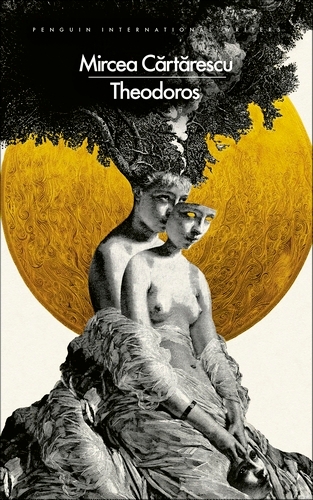
Penguin International Writers
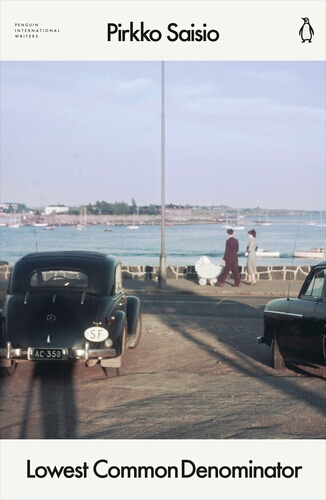
#1 - Lowest Common Denominator
‘Grandpa says everyone should leave me alone. If I want to be a boy, then I’m a boy: simple as that.’
Writing in the wake of her father’s death, the narrator of Pirkko Saisio’s autofictional novel transports us to the 1950s Finland of her youth, where she navigates life as an only child of communist parents. Convinced she will grow up to become a man, a young Pirkko keeps trying and failing to meet the expectations of the adults around her.
With wit and style, Saisio captures the heart-wrenching intensity of childhood feeling, merging fever dreams with sensory-laden memories as each formative experience – with the Big Bad Wolf, a bikini-clad circus announcer, and Jesus Christ himself – drives her further and further from her family and others. Struggling to understand her place in the world around her, it’s in language that she discovers a refuge and a way to be seen at last.
An unforgettable story of transformation, Lowest Common Denominator is the first volume in a trilogy that has been celebrated in Finland as the best work of the century.
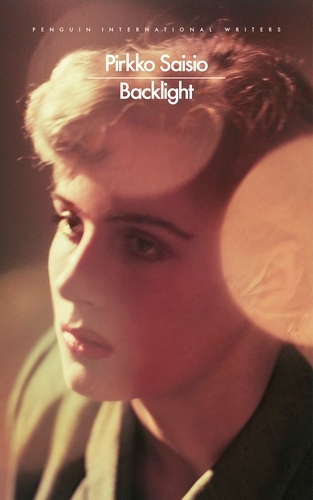
#2 - Backlight
A riveting, funny coming-of-age story: the second volume in Pirkko Saisio's award-winning Helsinki trilogy
Teenaged Pirkko can’t decide which she hates most: God, her communist father, or her growing breasts. Grandpa has moved into the room long promised to her, and Mother, overworked and distant, tries to keep the peace between her headstrong daughter and husband. It's 1960s Finland and Pirkko has fun getting into trouble. That is, until her teacher suggests she might have what it takes to be a real writer. Then the historic summer of 1968 arrives, which Pirkko spends working at a Swiss orphanage where no one understands her and, as much as her family drive her mad, she’s homesick for the first time.
As the world shifts and swirls around her, Pirkko must make sense of it all – including her own sexual identity. A funny, unique coming-of-age story and an intimate portrait of a life lived in language, Backlight is the second volume in Pirkko Saisio's award-winning Helsinki trilogy.
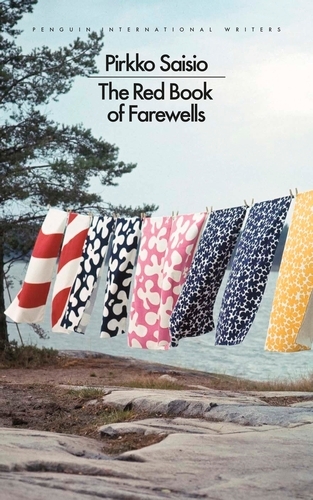
#3 - The Red Book of Farewells
In 1970s Helsinki, a revolutionary storm is blowing through Pirkko Saisio’s university. She has moved out of her family home, joined a communist theatre, and fallen in love for the first time. Her newly shaved head looks unmistakably modern, and Bertold Brecht lives on her windowsill to profess God-like words of wisdom.
Playful, moving and original, this autofictional coming-of-age story embeds the reader in a world where art and activism are irrevocably intertwined, and where queer love, still a crime, thrives in underground bars.
In her mesmerizing account of radical politics and sexual awakening, Pirkko Saisio offers a series of farewells, to her mother, to the idealism of youth, to friends and lovers and finally to her grown daughter. The grand finale of the award-winning Helsinki trilogy, The Red Book of Farewells embraces the revolutionary potential of moving on.
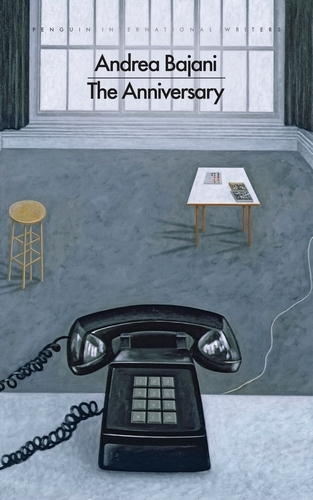
The Anniversary
'On that day, ten years ago, I saw my parents for the last time. Since then I’ve changed phone numbers, houses, continents, I’ve erected an impregnable wall and put an ocean between us. They’ve been the best ten years of my life.'
A son is celebrating a bittersweet anniversary. It is a decade since he saw his parents: the father who ruled through petty acts of intimidation and fear, the mother who silently accepted it, fitting herself in the spaces around others’ lives. As he looks back, he recalls the airless family home, unsettled only by the ringing of a telephone, or a visitor who was soon rejected. And he remembers how he became possessed by the irrepressible desire to be free, to live his own life. But can you ever escape the grip of your origins?
At once unflinchingly honest and razor sharp, The Anniversary is above all a novel of liberation which dismantles the tyranny of the family. It becomes a mirror in which we glimpse something that, even if we have not known it, affects us all.
The Penguin Book of the International Short Story
For a long time, it was the norm for three quarters of the stories in international anthologies to be American or English. In this collection, the work of thoughtful and accomplished translators opens the door wide for those curious about what lies beyond the Western canon and classroom. Writers from six continents, ranging from new voices to literary icons, each offer a window into a distinct point of view, both transcending and illuminating their place of origin. They offer not only captivating prose, but a reminder of the power of the imagination across space and time.
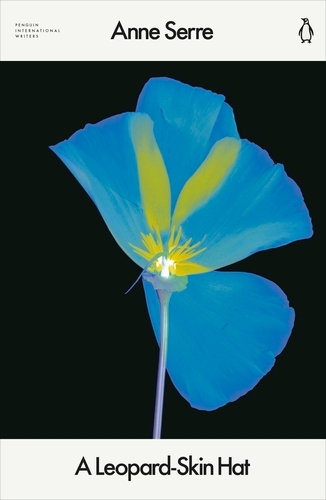
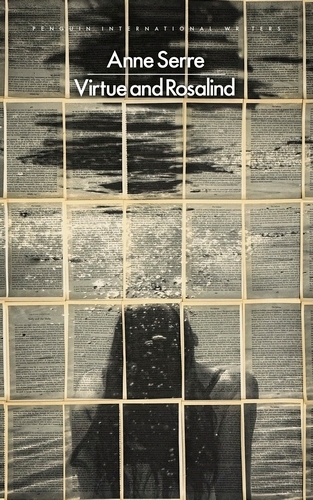
A Leopard-Skin Hat
A series of short scenes paints the portrait of a strong-willed and tormented young woman battling many demons, and of the Narrator’s loving and anguished attachment to her. Serre poignantly depicts the bewildering back and forth between hope and despair involved in such a relationship, while playfully calling into question the very form of the novel. Written in the aftermath of the death of the author’s little sister, A Leopard-Skin Hat is both the celebration of a tragically foreshortened life and a valedictory farewell.
Translated from French by Mark Hutchinson.
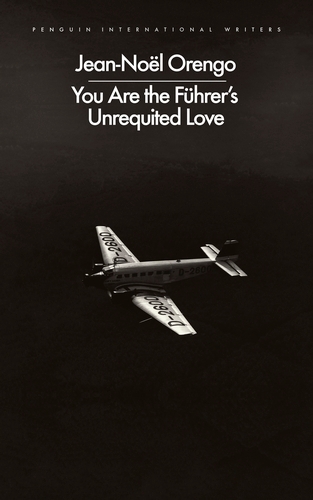
You Are the Führer's Unrequited Love
‘Which is the most seductive, truth or fiction?’
This is the story of Albert Speer: The protégé. The ‘good Nazi’. The star. The mythmaker.
In 1969 Speer, Hitler’s favourite architect and Minister of Armaments and War Production, publishes his memoirs. Rewriting his own past, claiming to have known nothing about the Final Solution, he declares himself ‘collectively responsible, but not individually guilty’.
It is one of the greatest lies in history.
Jean-Noël Orengo’s electrifying novel is the story of a man who saved his skin through the countless fictions he created about himself. A man with a talent for survival, who dazzled those around him with his monuments to power and then, escaping death, reinvented himself as a bestselling author. A man once described as the Führer's unrequited love.
It is a story of power and ambition, self-interest and self-deceit – and what happens in a war over the truth.
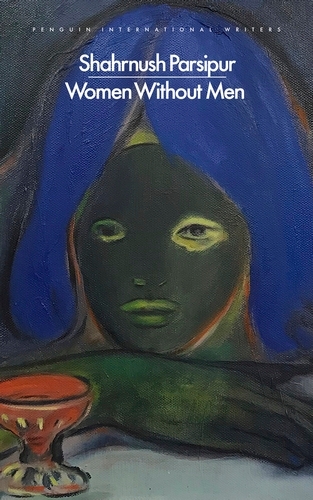
Women Without Men
This internationally acclaimed masterpiece by one of Iran’s most important and influential writers traces the interwoven destinies of five women – including a wealthy middle-aged housewife, a sex worker and a schoolteacher – as they arrive by different paths to live together in an abundant garden on the outskirts of Tehran.
Drawing on recent Iranian history and transcendent elements of Islamic mysticism, Parsipur’s unforgettable novel sees women escaping strict confines of family and society. It is still as pertinent and discerning today as it was when travelling secretly from hand to hand upon its first publication in 1989.

Natalja's Stories
This is the story of a young woman who is spirited away to St. Petersburg from Copenhagen by a lovestruck admirer. When she dies after the Russian Revolution, her ashes are carried back to Denmark, igniting a chain reaction of further stories, told and retold by the women in her family against a shifting ground of meaning. We meet murderers and fable-like characters, such as the hilarious and unsettling Viktor Blanke, who manages to seduce not one but three generations of mothers and daughters. Natalja, we discover, cannot be held in one place. Rather than giving in to the tragedy that befalls her, she wills herself to become someone else, reinventing her family’s narrative one irresistible tale at a time.
Tantalizing and full of wit, this remarkable, shape-shifting novel is available in English for the first time.
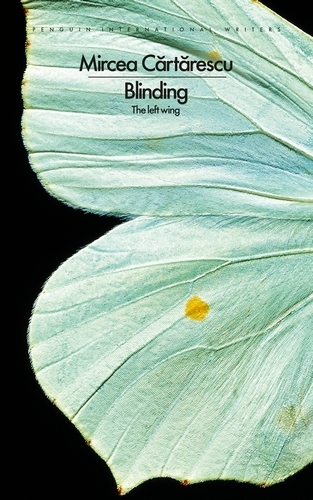
Blinding: The Left Wing
'This is writing of overwhelming accomplishment' Chris Power, Observer
An enthralling, hallucinatory masterwork by one of Central Europe’s most celebrated novelists
‘We exist between the past and future like the vermiform body of a butterfly, in between its two wings’
Beneath the streets of communist Bucharest linger hidden passageways, lost to memory. Here, sprawling hospitals give way to travelling circuses and underground jazz clubs, and Cartarescu’s childhood, prehistory and visionary fever dreams are woven into the landscape of the city, haunted by secret police and zombie hoards.
Part visceral dream-memoir, part phantasmic pilgrimage, Mircea Cartarescu’s Blinding is one of the most widely heralded literary sensations in contemporary Romania, and a fascinating, kaleidoscopic journey into the past.

I Don't Care
I Don't Care presents the best short fiction by the Hungarian master Ágota Kristóf, selected by the author herself and available in English for the first time. Written immediately before her acclaimed Notebook trilogy, the works here oscillate between parables, surrealist anecdotes, and stories animated by a realism stripped to the bone. By turns harrowing and whimsical, cruel and sharply funny, Kristóf’s world shifts our gaze to a shared reality, past and present. Here exile and existential alienation are undeniable – as is the force of every sentence, making for extraordinary and essential reading.

Troll
The troll lives in the forest, which is shrinking by the day. Her fate is tied to the earth, and she suffers for it.
Far away sits the power-hungry king. The townspeople fear him. They have little choice but to follow his orders, to slaughter the animals and cut down trees. To make it stop, the troll must punish them.
In the cracks, there is love, maybe even hope. Erik and Petra have both retreated from the community. They find each other. Soon Petra is pregnant. But can their new union bear the presence of a child?
Karoline turns to magic. If only she can make her oats and money disappear, the king’s men won’t be able to take them from her. But the spell isn't reliable, and she goes to further extremes to rebel against the king.
She is admired for her activism: by the troll, and by Kaj. Even if he doesn’t quite understand Karoline, her presence has a soothing effect on him. At home he struggles to keep Emil alive, who lies all day on a goatskin rug on the floor.
The fox sees how much the troll is suffering. To give her a break, he takes it upon himself to carry out her work. But soon his own instincts betray him, and the troll can make no exceptions.
Timeless and unforgettable, hilarious and upsetting, surreal yet infinitely tender, reading Rasmus Daugbjerg is like discovering Hans Christian Andersen for the first time.
Translated from Danish by Hazel Evans.